You know something isn’t right. Maybe they cancel plans constantly. Maybe they say things that cut deep and then act like nothing happened. Maybe they’ve already shown you who they are — but you stay. You keep hoping. You keep forgiving.
And the hardest part? It doesn’t feel like a bad choice. It feels like love. It feels like loyalty. It feels like something worth fighting for.
But here’s the truth most people don’t want to hear: being emotionally attached to someone unhealthy doesn’t mean you love them too much. It means the bond has crossed a line — from connection into something that’s quietly taking pieces of who you are.
This guide walks you through the real signs. Not textbook definitions. Real patterns that show up in your daily life, your body, and your sense of self. If you’ve ever wondered whether your emotional attachment is healthy or harmful, keep reading.
What Is Unhealthy Emotional Attachment?
Emotional attachment is natural. It’s how we bond with the people we care about. Babies attach to caregivers. Partners attach, Friends form deep bonds over shared experiences. This is normal and healthy.
Unhealthy emotional attachment is different. It happens when the bond no longer serves you, when it becomes a source of pain, anxiety, and self-loss rather than comfort and growth.
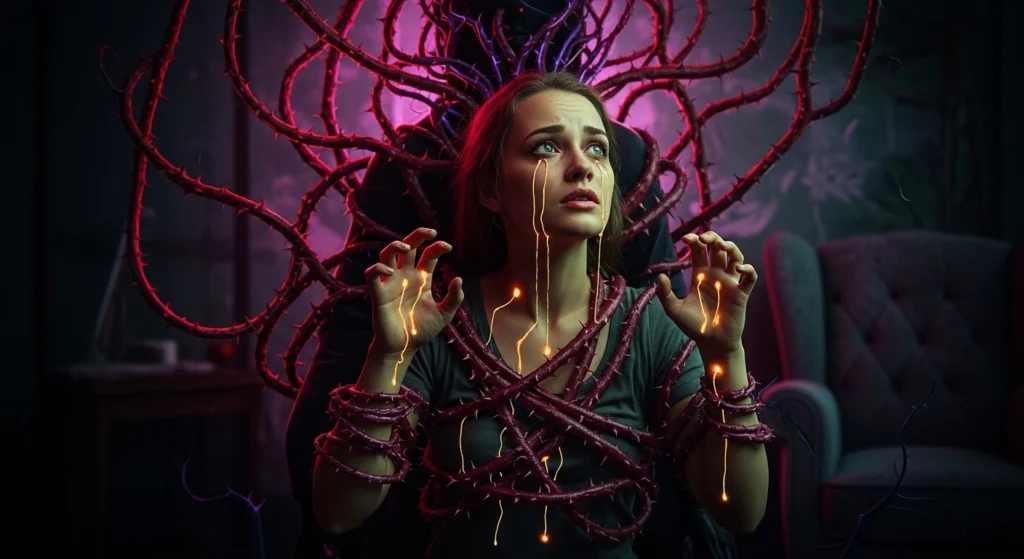
Think of it this way: healthy attachment feels like an anchor. It holds you steady. Unhealthy attachment feels like a chain. It keeps you stuck.
The tricky part? From the inside, they feel almost identical. That’s why so many people mistake unhealthy attachment for deep love. The intensity is real. The feelings are real. But the pattern underneath is doing damage.
How It Connects to Soul Ties
If you’ve read about signs of soul ties, you’ll recognize overlap here. An emotional soul tie that turns toxic often creates exactly this kind of unhealthy attachment. The bond runs so deep that walking away feels impossible — even when staying is destroying you.
12 Signs You’re Emotionally Attached to Someone Unhealthy
These signs don’t always appear all at once. Sometimes they creep in slowly. Pay attention if several of them feel familiar.
1. You Excuse Behavior You’d Never Accept From Anyone Else
They lie. They disappear. They say cruel things during arguments. And you find yourself making reasons for it. “They had a rough childhood.” “They didn’t mean it.” “They’re different when we’re alone.”
Ask yourself: if a friend told you their partner did the same things, what would you tell them? If the answer is “leave,” but you stay — the attachment is running the show, not your judgment.
2. Your Mood Depends Entirely on Them
When they’re happy with you, the world feels bright. When they pull away or seem upset, everything crashes. Your emotional state has become a mirror of theirs.
This is called emotional enmeshment. You’ve lost the ability to regulate your own feelings independently. Their mood becomes your weather — and you have no umbrella.
3. You’ve Stopped Doing Things You Used to Love
You used to paint. Or run. Or spend time with friends. Now most of your energy goes toward managing the relationship. You’ve abandoned hobbies, pulled away from people, and shrunk your world to fit around one person.
Losing your interests is one of the earliest signs that emotional attachment has become unhealthy. When a relationship starts erasing parts of who you are, something is wrong.
4. You Feel Anxious When They Don’t Respond
A few hours without a text shouldn’t send you spiraling. But it does. You check your phone obsessively. You reread their last message for hidden meanings. You imagine worst-case scenarios.
This kind of attachment anxiety comes from an unpredictable bond. When someone gives you warmth one day and coldness the next, your nervous system stays on high alert. You become wired for fear.
5. You Keep Going Back After Every Breakup
You’ve ended things before. Maybe twice. Maybe ten times. But somehow, you always return. The pain of being apart feels worse than the pain of being together.
This cycle of leaving and returning is a hallmark of unhealthy emotional attachment. It mirrors addiction — and that’s not a metaphor. The brain chemistry is remarkably similar.
6. You’ve Lost Touch With Your Own Identity
If someone asked you “Who are you outside this relationship?” — could you answer? When unhealthy attachment takes root, your sense of self starts dissolving. Your opinions become theirs. Your goals revolve around them. You don’t know what you want anymore.
This is what therapists call identity erosion. It’s one of the most damaging effects of being emotionally attached to someone who isn’t good for you. For more on how this connects to deeper bonds, see our guide on psychological signs of soul ties.
7. You Defend Them Even When No One Is Attacking
Friends gently express concern. Your family asks careful questions. And you immediately jump to their defense. Not because the concerns are wrong — but because the attachment makes any criticism of them feel like an attack on you.
When you’ve merged emotionally with someone, protecting them feels like protecting yourself. That’s how deep the enmeshment runs.
8. Your Body Keeps Score
Headaches. Stomach problems. Tight chest. Jaw clenching. Exhaustion that sleep doesn’t fix. Your body is telling you something your heart doesn’t want to hear.
Chronic stress from an unhealthy bond shows up physically. Your nervous system can’t stay in fight-or-flight mode forever without consequences. If your health started declining after this relationship began, pay attention to that timeline.
9. You Feel Guilty for Wanting Better
You catch yourself thinking, “Maybe I deserve more.” Then immediately, guilt floods in. You feel selfish for wanting peace. Disloyal for imagining a life without them.
This guilt isn’t coming from a healthy place. It’s a sign that the attachment has rewritten your internal rules. Wanting to be treated well isn’t selfish. It’s the bare minimum.
10. You’ve Isolated Yourself From Support Systems
Your circle has gotten smaller. Friends you used to call every week now feel like strangers. Family gatherings feel like obligations rather than comfort. You may have even been told to distance yourself from certain people by the person you’re attached to.
Isolation is both a symptom and a tool of unhealthy attachment. When you’re cut off from outside perspectives, the relationship becomes your entire reality — and it becomes nearly impossible to see it clearly.
11. You Confuse Intensity With Intimacy
The highs are incredible. The lows are devastating. And you’ve convinced yourself that this emotional rollercoaster is what real love feels like. “If it doesn’t hurt, it doesn’t matter,” you think.
But real intimacy doesn’t require chaos. Genuine closeness feels calm. It feels steady. If the only way you feel connected is through drama, the bond is feeding on conflict, not trust.
12. You Know It’s Wrong, But Can’t Walk Away
This is the sign that cuts deepest. You see it clearly. You know the pattern. You’ve read articles like this one and thought, “That’s me.” But knowing and leaving are two very different things.
The inability to leave despite clear awareness is the defining feature of unhealthy emotional attachment. It’s not a weakness. It’s the power of a bond that has wired itself into your nervous system, your self-concept, and your deepest fears.
Why Do We Get Emotionally Attached to Unhealthy People?

Understanding the “why” doesn’t excuse the behavior — but it helps you break the pattern. Here are the most common reasons.
Attachment Styles From Childhood
If your early caregivers were unpredictable — loving one moment and distant the next — your brain learned that inconsistency is normal. As an adult, you may unconsciously seek partners who recreate that same push-pull dynamic because it feels familiar.
People with anxious attachment styles are especially prone to bonding deeply with emotionally unavailable or harmful partners.
The Brain Chemistry of Toxic Bonds
Intermittent reinforcement — where love and pain come in unpredictable waves — triggers powerful dopamine responses. Your brain treats the occasional good moment like a reward, keeping you hooked on the possibility that things will get better.
This is the same mechanism that makes gambling addictive. The uncertainty itself becomes the drug.
Low Self-Worth
If you don’t believe you deserve healthy love, you’ll accept whatever version of love is offered. People with low self-esteem often feel grateful just to be wanted — even by someone who treats them poorly.
Fear of Being Alone
For some people, a bad relationship feels safer than no relationship at all. The fear of loneliness, of starting over, of facing yourself without someone to orbit — that fear can keep you glued to a person who hurts you.
Unhealthy Emotional Attachment vs. Love
People confuse these all the time. Here’s how they actually differ.
| Feature | Healthy Love | Unhealthy Attachment |
|---|---|---|
| Core feeling | Safety and peace | Anxiety and fear |
| Boundaries | Respected and maintained | Blurred or ignored |
| Identity | You remain yourself | You lose yourself |
| Conflict | Resolved respectfully | Explosive or silent treatment |
| Energy | You feel recharged | You feel drained |
| Growth | Encouraged | Discouraged or controlled |
| Leaving | Sad but possible | Feels impossible |
| Time apart | Comfortable | Panic-inducing |
The Emotional Toll Nobody Talks About
Most articles cover the signs. Few talk about what unhealthy emotional attachment actually costs you over time.
Chronic Self-Doubt
You start questioning everything. Your memory. Your feelings. You’re right to be upset. Over time, you lose trust in your own perception. This is especially common when the person you’re attached to gaslights or minimizes your experience.
Emotional Numbness
After so many cycles of hope and disappointment, your emotions can shut down. You stop feeling joy in things that used to bring happiness. You go through the motions but feel hollow inside. This isn’t laziness — it’s your nervous system protecting you from more pain.
Decision Paralysis
When your emotional compass has been hijacked by someone else, making choices becomes terrifying. “What if I choose wrong? What if they get angry?” You freeze. Even small decisions — where to eat, what to wear — feel overwhelming.
Shame Spiral
You know you should leave. Everyone says so. And because you can’t, you feel ashamed. That shame pushes you further into isolation, which deepens the attachment. It’s a vicious loop that feeds itself.
How to Start Breaking an Unhealthy Emotional Attachment
Breaking free isn’t a single decision. It’s a series of small, brave steps. Here’s a path that works.
Step 1: Name What’s Happening
Say it out loud or write it down: “I am emotionally attached to someone who is not healthy for me.” Naming the problem takes it from a vague feeling to something concrete you can work with.
Step 2: Stop Minimizing the Harm
Stop telling yourself “it’s not that bad.” If you’re reading this article, something in you already knows it is that bad. Trust that instinct.
Step 3: Reconnect With One Person You Trust
You don’t need to rebuild your entire social life overnight. Start with one person. A friend. A sibling. A therapist. Let someone see what’s really going on.
Step 4: Set One Boundary
You don’t have to set every boundary at once. Start with one. “I won’t respond to texts after midnight.” “I won’t cancel my plans because they want me to.” One boundary is a seed. It grows.
Step 5: Feel the Withdrawal
When you start pulling away, it will hurt. You’ll feel the pull to go back. That’s normal. That’s the attachment talking. Sit with the discomfort. It will pass — and every day it gets a little easier.
Step 6: Rebuild Your Identity
Go back to the things that made you you before this relationship. Revisit old hobbies. Set goals that have nothing to do with another person. Remember who you were before the bond rewrote your story.
Step 7: Get Professional Support
A therapist who understands attachment patterns can help you see the roots of this bond and rewire the thought patterns keeping you stuck. This isn’t something you should do alone if you don’t have to.
When Unhealthy Attachment Meets a Soul Tie
Sometimes the emotional attachment you feel isn’t just a habit or an attachment style issue. It’s something deeper — what many people call a soul tie.
A soul tie adds a spiritual or energetic layer to an already powerful emotional bond. When the soul tie is unhealthy, the attachment feels almost supernatural — like you’re tethered to this person at a level that logic can’t touch.
If your experience goes beyond typical attachment anxiety and feels like something you can’t explain rationally, exploring the emotional signs of soul ties and the psychological signs of soul ties may give you additional clarity.
Frequently Asked Questions
What does it mean to be emotionally attached to someone who is unhealthy?
It means you feel a deep bond with a person who consistently drains your energy, crosses your boundaries, or harms your well-being — yet you struggle to pull away because the emotional connection feels too strong to break.
Why is it so hard to leave someone you’re emotionally attached to?
Your brain releases bonding chemicals like oxytocin and dopamine during emotional highs. In unhealthy relationships, the cycle of pain and relief creates a pattern similar to addiction, making it extremely difficult to leave.
Can you be emotionally attached to someone toxic without realizing it?
Yes. Unhealthy emotional attachment often disguises itself as deep love or loyalty. You may not realize the bond is harmful until you notice patterns like constant anxiety, loss of identity, or physical symptoms of stress.
How do you break an unhealthy emotional attachment?
Start by naming the attachment honestly. Limit or cut contact. Work with a therapist to process the emotions. Rebuild your sense of self through hobbies, friendships, and personal goals. Healing takes time, but it is absolutely possible.
Is emotional attachment the same as love?
Not always. Healthy love involves mutual respect, safety, and growth. Unhealthy emotional attachment often involves fear, control, and dependency. The feelings may be intense, but intensity is not the same as genuine love.
Can childhood trauma cause unhealthy emotional attachment in adults?
Yes. People who experienced inconsistent caregiving, abandonment, or emotional neglect as children often develop anxious attachment styles. These patterns can lead to bonding deeply with partners who repeat familiar but harmful dynamics.
Final Thoughts
Being emotionally attached to someone who is unhealthy doesn’t make you foolish or weak. It makes you human. You connected deeply — and that connection became a trap rather than a home.
But traps can be opened. Chains can be broken. And the person you were before this bond? They’re still in there, waiting for you to come back.
You don’t have to figure everything out today. Just take one step. Name what’s happening. Tell one person. Set one boundary. That’s enough for now.
You deserve a connection that makes you feel whole — not one that slowly takes you apart. And the moment you choose yourself? That’s when healing begins.