Not all soul ties are beautiful. Some grab hold of you so tight, you forget what it feels like to breathe on your own. If you’ve ever loved someone in a way that left you feeling smaller, weaker, or lost, you may be dealing with an unhealthy soul tie.
A soul tie is a deep bond between two people. It can form through love, intimacy, shared pain, or intense experiences. When the bond is healthy, it lifts you. But when it’s unhealthy, it pulls you under, and you might not even realize it’s happening.
This guide walks you through the real warning signs of an unhealthy soul tie. Not just surface-level stuff. We’re going deep — into the emotional, mental, and physical ways these bonds show up. By the end, you’ll know exactly what to look for and how to start breaking free.
What Makes a Soul Tie Unhealthy?
A healthy soul tie makes you feel safe. You grow. You feel like yourself — maybe even a better version of yourself. There’s mutual respect, space, and trust.
An unhealthy soul tie is the opposite. It makes you feel trapped. You shrink. You lose pieces of who you are. The bond feels more like a chain than a connection.
Here’s the tricky part: unhealthy soul ties often feel like love. The intensity gets mistaken for passion. The fear of losing them gets mistaken for deep devotion. But real love doesn’t leave you feeling empty, anxious, or afraid.
Unhealthy soul ties tend to form through:
Trauma bonding — cycles of hurt and reconciliation
Physical intimacy without emotional safety
Emotional manipulation — guilt, control, or gaslighting
Shared crisis — surviving something intense together
Spiritual enmeshment — using faith to justify staying
11 Warning Signs of an Unhealthy Soul Tie
1. You Can’t Stop Thinking About Them — Even When You Want To
Everyone thinks about people they care about. That’s normal. But with an unhealthy soul tie, the thoughts are relentless. They barge into your mind when you’re working, eating, or trying to sleep. You didn’t invite them — they just show up.
These aren’t sweet, fond memories. They’re more like intrusive loops. You replay conversations. You imagine scenarios. You analyze every text, every look, every silence. It eats up your mental energy and makes it hard to focus on anything else.
2. You Feel Physically Sick Without Them
This goes beyond missing someone. When you’re apart from this person, your body reacts. Your chest feels tight. Your stomach churns. You might even have trouble eating or sleeping.
That’s your nervous system responding to the bond. In unhealthy soul ties, your body starts to associate the other person with emotional regulation. Without them, you feel dysregulated — almost like withdrawal.
If separation from someone triggers physical distress, that’s a red flag worth paying attention to.
3. You’ve Lost Touch With Who You Are
Before this person, you had hobbies. You had opinions. You had a life that was yours. Now? It all revolves around them.
This is called identity erosion. You stop doing things you used to love. You adopt their preferences, their worldview, even their vocabulary. If someone asked you, “What do you want?” — you wouldn’t have an answer.
In a healthy relationship, two whole people come together. In an unhealthy soul tie, one person slowly disappears into the other.
4. You Keep Going Back Despite Being Hurt
You know they’re not good for you. Your friends have told you. Your gut has told you. Maybe even your therapist has told you. But you keep going back.
This is one of the clearest signs of an unhealthy soul tie. The bond overrides your logic. You make excuses for their behavior. You convince yourself that “this time will be different.” The cycle repeats — hurt, leave, return, repeat.
It’s not a weakness. It’s the power of a bond that has wired itself into your emotions and your body.
5. You Feel Responsible for Their Emotions
When they’re upset, you feel it in your bones. Not in a normal empathetic way — in a way that makes you feel like it’s your job to fix it. If they’re sad, you think you caused it. If they’re angry, you scramble to make it better.
This emotional ownership is a hallmark of an unhealthy soul tie. You’ve taken on their emotional world as your own. Your moods rise and fall based entirely on how they’re doing — and that’s exhausting.
6. You Tolerate Things You Never Would Have Before
You used to have boundaries. You used to know what you would and wouldn’t accept. But this person has slowly moved those lines — and you let them.
Maybe you tolerate being ignored. Maybe you accept being yelled at. Maybe you forgive lies that would have been deal-breakers with anyone else. An unhealthy soul tie has a way of making the unacceptable feel normal.
Ask yourself: would I tell my best friend to stay in a situation like this? If the answer is no, that tells you something.
7. Your Self-Worth Depends on Their Approval
When they compliment you, you feel amazing. When they criticize you or pull away, you crumble. Your entire sense of value hangs on whether they validate you or not.
This isn’t love. It’s emotional dependency. And in an unhealthy soul tie, this dependency becomes so deep that you genuinely believe you are nothing without them.
But here’s the truth: you existed before them. You had value before them. And you’ll have value long after this bond is broken.
8. You Feel Drained After Being With Them
Healthy connections energize you. You walk away feeling lighter, happier, and more like yourself. An unhealthy soul tie does the opposite.
After spending time with this person, you feel emotionally exhausted. Maybe mentally foggy. Maybe physically heavy. That’s because the relationship is taking more than it gives. You’re pouring into a connection that doesn’t fill you back up.
9. You Isolate Yourself From Others
Maybe they don’t like your friends. Maybe you’re too tired to socialize. Maybe you’re afraid of what others will say about the relationship. Whatever the reason, you’ve slowly pulled away from the people who care about you.
Isolation is both a symptom and a tool of unhealthy soul ties. It keeps you inside the bubble where the bond is the only thing that matters. The more alone you are, the harder it becomes to see the situation clearly.
10. You Experience Jealousy or Possessiveness
A small amount of jealousy can be normal. But in an unhealthy soul tie, jealousy becomes consuming. You check their phone. You need to know where they are at all times. The thought of them being close to someone else fills you with panic.
Or maybe it’s the other way around — they’re possessive over you. Either way, this kind of jealousy isn’t about love. It’s about fear. Fear of losing the bond, because the bond has become your identity.
11. You Feel Guilty for Wanting to Leave
You know something isn’t right. Part of you wants out. But the moment you think about leaving, the guilt hits hard. You feel like you’d be abandoning them. Like you owe them something. Like, leaving would make you a bad person.
This guilt is the glue that holds unhealthy soul ties together. It keeps you stuck. It tells you that your needs don’t matter as much as the bond. But that’s a lie. You are allowed to walk away from something that hurts you — even if you love the person.
How Unhealthy Soul Ties Show Up in Your Body

Most people think of soul ties as emotional or spiritual things. But they also live in your body. When a bond becomes unhealthy, your nervous system responds. Here’s what that can look like:
- Chest tightness or heart palpitations — especially when thinking about them
- Stomach problems — nausea, loss of appetite, or stress-related IBS
- Chronic fatigue — even when you’ve slept enough
- Insomnia — racing thoughts at night about the person
- Panic attacks — triggered by conflict or fear of abandonment
- Muscle tension — especially in the shoulders, jaw, and back
Your body keeps score. If you’re experiencing physical symptoms that doctors can’t explain — and they happen to align with this relationship — it’s worth considering whether an unhealthy soul tie is the root cause.
Healthy Soul Tie vs. Unhealthy Soul Tie
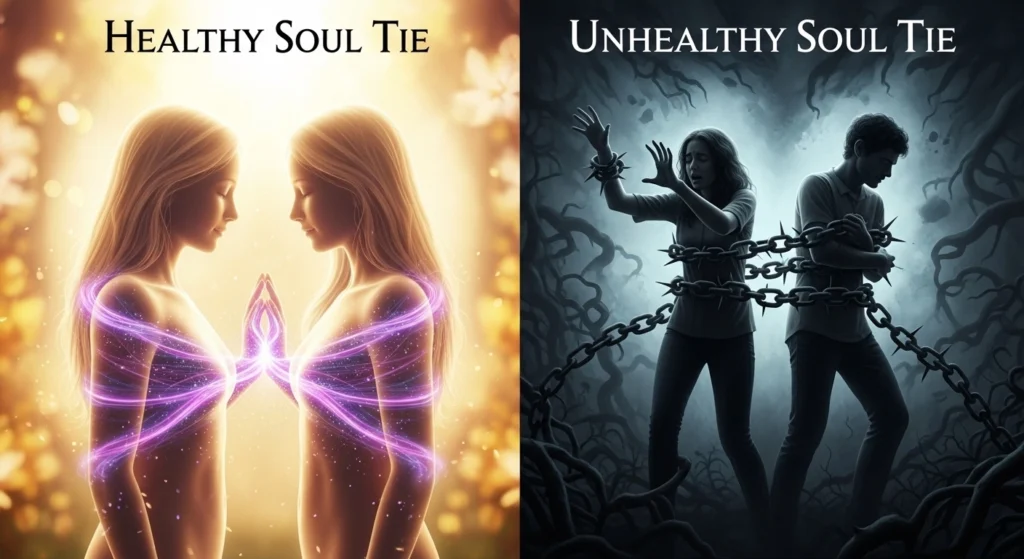
Not sure if your bond is nourishing you or destroying you? This comparison can help:
| Healthy Soul Tie | Unhealthy Soul Tie |
|---|---|
| You feel safe and secure | You feel anxious and on edge |
| You grow as a person | You lose pieces of yourself |
| Both people have freedom | One or both feel trapped |
| You can be apart without distress | Separation causes panic |
| You respect each other’s boundaries | Boundaries are ignored or punished |
| The bond energizes you | The bond drains you |
| You have your own identity | Your identity depends on them |
| Conflict leads to growth | Conflict leads to chaos or silence |
Why It’s So Hard to Leave an Unhealthy Soul Tie
If you recognize these signs but can’t seem to walk away, you’re not alone. There are real reasons why unhealthy soul ties are so hard to break:
Neurochemical Addiction
Intense relationships trigger the release of dopamine, oxytocin, and cortisol. The highs feel euphoric. The lows feel devastating. This push-pull creates a chemical cycle in your brain that’s similar to substance addiction. You’re literally wired to crave the bond.
Fear of Being Alone
When your identity has been wrapped up in someone else for so long, the idea of being alone feels terrifying. Not just lonely — but genuinely frightening. You don’t know who you are without them.
Spiritual Confusion
Some people believe soul ties are “meant to be.” They interpret the intensity as divine purpose. This makes leaving feel like going against God, the universe, or fate — which adds a layer of guilt on top of everything else.
Sunk Cost Thinking
You’ve invested years, tears, and energy. Walking away feels like all of that was for nothing. So you stay, hoping your investment will eventually pay off. But staying in something harmful doesn’t honor the time you spent — it just costs you more.
How to Break an Unhealthy Soul Tie: 7 Steps
Breaking free isn’t easy. But it’s possible. Here’s a path that actually works:
Step 1: Name What’s Happening
You can’t heal what you don’t acknowledge. Say it out loud or write it down: “I have an unhealthy soul tie. This bond is hurting me.” Naming it takes away some of its power.
Step 2: Go No-Contact (or Low-Contact)
This is the hardest step, but it’s the most important. Every interaction feeds the bond. Remove them from your social media. Delete their number if you need to. Create physical and digital distance.
Step 3: Let Yourself Grieve
Breaking a soul tie — even a toxic one — involves loss. Let yourself cry. Let yourself feel the emptiness. Don’t rush past it. Grief is how your heart processes the ending of something that mattered, even if it wasn’t good for you.
Step 4: Reconnect With Yourself
Remember the things you loved before this person? Go back to them. Pick up old hobbies. Spend time with the friends you drifted from. Ask yourself what you want — not what they wanted for you.
Step 5: Work With a Therapist
A trained therapist can help you understand why this bond formed, process the pain, and rebuild your sense of self. Look for someone experienced in attachment issues, trauma recovery, or codependency.
Step 6: Create New Patterns
Unhealthy soul ties thrive on routine. Break the patterns. Change your daily schedule. Find new places to go. Build routines that don’t include them. Your brain needs new neural pathways to replace the old ones.
Step 7: Be Patient With Yourself
Healing isn’t linear. Some days you’ll feel strong. On other days, the pull will feel unbearable. That’s okay. Every day you don’t go back is a win. Every boundary you hold is progress. Give yourself grace.
Frequently Asked Questions
What is an unhealthy soul tie?
An unhealthy soul tie is a deep emotional or spiritual bond that drains you. It often involves obsessive thinking, emotional dependency, loss of identity, and difficulty leaving the relationship — even when it causes harm.
How do you know if a soul tie is toxic?
A toxic soul tie shows signs like constant anxiety, inability to function without the person, ignoring your own needs, feeling empty when apart, and returning to the relationship despite repeated hurt.
Can an unhealthy soul tie form without physical intimacy?
Yes. Unhealthy soul ties can form through shared trauma, emotional vulnerability, intense experiences, or spiritual manipulation — even without any physical contact.
What’s the difference between an unhealthy soul tie and a trauma bond?
A trauma bond forms through repeated cycles of abuse and reconciliation. An unhealthy soul tie is broader — any intense bond that becomes draining or controlling. All trauma bonds are unhealthy, but not all unhealthy soul ties involve abuse cycles.
Can you break an unhealthy soul tie?
Yes. It takes time and effort, but it’s absolutely possible. Key steps include going no-contact, working with a therapist, rebuilding your identity, and permitting yourself to grieve the loss.
Can unhealthy soul ties cause physical symptoms?
Yes. Many people report chest tightness, stomach problems, fatigue, insomnia, and panic attacks — especially during separation or conflict with the other person.
Final Thoughts
An unhealthy soul tie doesn’t mean you’re weak or broken. It means you’re human. You connected deeply with someone — and that connection turned into something that no longer serves you.
The signs are there if you’re willing to see them. The obsessive thoughts. The lost identity. The cycle of leaving and returning. The physical toll. These aren’t signs of great love. There are signs that the bond needs to be broken so you can be whole again.
You deserve a connection that makes you feel alive — not one that makes you feel like you’re drowning and breaking free? It’s the bravest thing you’ll ever do.