Have you ever felt someone else’s sadness as if it were your own? Maybe you woke up with a heavy heart — no reason, no trigger — and later found out the person you’re connected to was hurting at that exact moment.
Or maybe you’ve moved on from a relationship, built a new life, yet a quiet ache lingers. Something inside you is still tethered to that person. Not your mind. Not your body. Something deeper.
These are emotional signs of a soul tie. They show up in ways you can’t always explain. And once you learn to recognize them, everything about your past connections starts to make sense.
In this guide, we’ll walk through the clearest emotional signs that you have a soul tie with someone. We’ll explore why these bonds form, how they affect your mental health, and what to do when a soul tie is doing more harm than good.
What Is an Emotional Soul Tie?
A soul tie is a deep bond between two people. It can be spiritual, physical, or emotional. When we talk about the emotional side, we mean the feelings, moods, and inner experiences that connect you to someone at a level deeper than ordinary attachment.
Think of it this way: a normal bond is like holding hands. An emotional soul tie is like your nervous system being wired together. What they feel, you feel. What hurts them, hurts you, even when you’re miles apart.
Emotional soul ties can form through:
- Deep emotional vulnerability — sharing pain, fear, or hope at a raw level
- Intense romantic connection — especially when strong feelings develop fast
- Shared grief or trauma — going through something devastating together
- Long-term emotional intimacy — years of being each other’s safe space
- Unresolved emotional business — things left unsaid, apologies never given
Not every emotional bond becomes a soul tie. The difference is depth. A soul tie reaches places inside you that ordinary connections never touch.
12 Emotional Signs of a Soul Tie
If you’re wondering whether you have an emotional soul tie with someone, check these signs. If several hit close to home, the bond is likely real — and worth paying attention to.
1. You Feel Their Emotions Without Being Told
This is the hallmark of an emotional soul tie. You suddenly feel anxious, sad, or restless for no clear reason. Hours later, you find out the other person was going through something difficult at that exact time.
It’s not intuition in the usual sense. It’s more like emotional absorption. Their feelings leak into your system as if you share the same emotional bloodstream. Psychologists sometimes call this affective empathy on overdrive — your brain mirrors their emotional state without any conscious input.
2. You Can’t Stop Thinking About Them — Even When You Want To
This goes beyond nostalgia or missing someone. With an emotional soul tie, thoughts of this person are intrusive. They push into your mind when you’re working, cooking, or laughing with friends. It’s not a choice. It feels automatic.
What makes this different from rumination or obsession is the emotional charge behind it. Every thought carries a feeling — longing, warmth, sadness, or an aching need to reconnect. Your mind isn’t just remembering them. It’s reaching for them.
3. Unexplained Sadness or Grief That Won’t Lift
You might feel a low-level sadness that hangs over you like a cloud. Nothing in your own life explains it. Your job is fine. Your health is good. Your other relationships are okay. But something inside you feels incomplete.
This sadness often connects to the emotional soul tie. It’s a form of ambiguous grief — mourning a connection that isn’t dead but isn’t fully alive either. Your heart is grieving a bond it can’t let go of.
4. You Feel Emotionally Drained After Thinking About Them
A healthy bond energizes you. A toxic emotional soul tie does the opposite. After spending time thinking about this person — even just mentally replaying old conversations — you feel exhausted. Hollow. Like something has been pulled out of you.
This emotional fatigue is a sign that the bond is consuming more energy than it gives back. It’s your body’s way of saying: this connection costs too much.
5. Your Mood Shifts When They Contact You
A single text. One missed call. A name popping up on social media. That’s all it takes to flip your emotional state. You go from calm to anxious. From content to desperation. From peaceful to spiraling.
This emotional volatility shows how much power the soul tie holds over your inner world. Your emotional equilibrium becomes dependent on their presence or absence — and that’s a red flag worth noticing.
6. You Feel Guilty for Trying to Move On
This one surprises people. You know the relationship isn’t good for you. You know you should move forward. But every time you try, guilt floods in. It feels like betrayal — as if walking away from the bond means abandoning a part of yourself.
This guilt is often rooted in the emotional soul tie itself. The bond creates a false sense of loyalty that tells you letting go is wrong. It’s not. But the tie makes it feel that way.
7. You Lose Your Sense of Self
Who are you without them? If that question makes you uncomfortable, it’s a sign of a deep emotional soul tie. Over time, the bond can blur the line between your identity and theirs. You stop knowing what you want, feel, or believe — separate from them.
This identity enmeshment is one of the most damaging emotional effects. It erodes your autonomy. You start living through the lens of the connection instead of through your own eyes.
8. You Feel Physical Sensations Tied to Emotion
Emotional soul ties don’t stay in your head. They show up in your body. A tight chest when you think of them. A sinking feeling in your stomach. Tears that come from nowhere when a song reminds you of them.
These somatic emotional responses happen because your body stores emotional memory. The soul tie activates those memories, and your body reacts as if the person is right there in front of you — even when they’re not.
9. You Compare Everyone to Them
New people enter your life, but no one measures up. Not because the new people are bad, but because your emotional soul tie has set an invisible standard. Every new connection gets compared to that depth, that intensity, that feeling.
This makes it incredibly hard to build new, healthy relationships. The soul tie acts like a filter, making everything else seem pale and shallow by comparison.
10. You Experience Emotional Flashbacks
A smell. A place. A phrase. Suddenly you’re right back in the moment — feeling exactly what you felt then. These emotional flashbacks aren’t just memories. They’re full-body, full-heart re-experiences that can leave you shaking.
Emotional flashbacks tied to soul ties often happen without warning. They’re triggered by tiny, random cues — and they carry the same emotional weight as the original experience. This is a sign the bond is stored deep in your nervous system.
11. You Feel Anxious When You Don’t Hear From Them
Silence from this person doesn’t bring peace. It brings panic. Your mind races: Are they okay? Are they with someone else? Did I do something wrong? The anxious attachment that emotional soul ties create can mimic anxiety disorders.
In healthy bonds, silence is comfortable. In an emotional soul tie — especially a toxic one — silence feels like abandonment. Your emotional system goes into fight-or-flight over a simple lack of communication.
12. Letting Go Triggers Deep Emotional Pain
When you try to cut the cord, the pain isn’t just sad. It’s visceral. It feels like ripping apart something that was fused together. The grief can be as intense as losing someone to death, even though the person is still alive.
This level of pain during separation is a defining feature of an emotional soul tie. It explains why so many people return to unhealthy connections. The pain of staying feels terrible, but the pain of leaving feels worse.
How Emotional Soul Ties Affect Your Mental Health
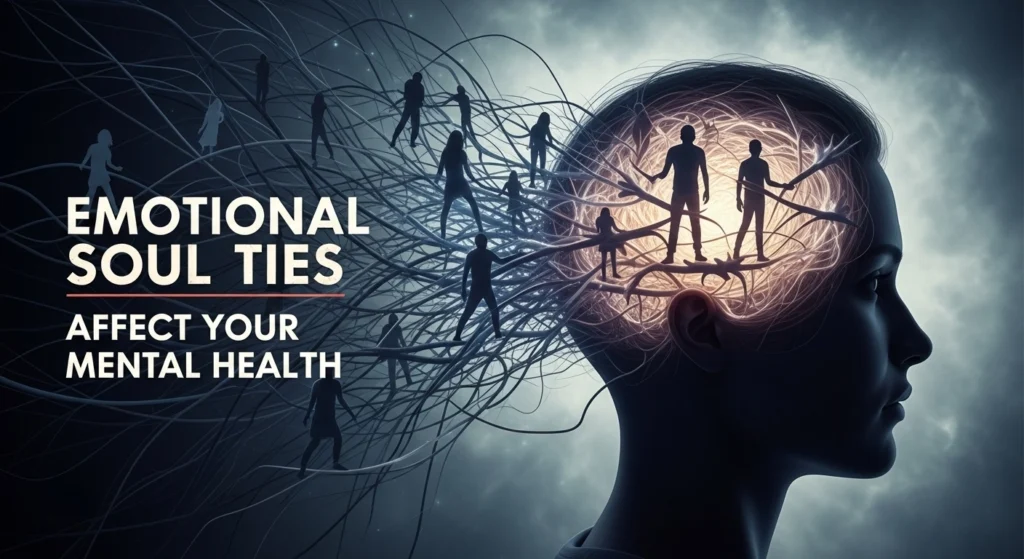
Soul ties don’t just live in the spiritual realm. They have real effects on your psychological well-being. Here’s what research-backed psychology tells us about bonds this intense:
Anxiety and Hypervigilance
Toxic emotional soul ties can keep your nervous system in a constant state of alert. You scan for signs of their mood. You worry about losing the connection. This chronic hypervigilance mimics generalized anxiety and can lead to burnout.
Depression and Emotional Numbness
When the soul tie involves loss or rejection, it can trigger depressive episodes. Some people describe feeling emotionally numb — as if they’ve shut down to avoid the pain. This emotional blunting is a protective response, but it can bleed into all areas of life.
Low Self-Worth
If the soul-tied person made you feel small, criticized you, or withheld love, the bond can internalize those messages. You start believing you’re not enough — not because it’s true, but because the emotional soul tie encoded that belief into your system.
Difficulty Trusting New People
After a toxic soul tie, opening up again feels dangerous. You know how deep the pain can go. So you keep walls up. You test new partners. You pull away before things get too close. The soul tie doesn’t just affect one relationship — it shapes how you approach all future ones.
Emotional Soul Tie vs. Codependency: What’s the Difference?
These two overlap a lot, which confuses. Here’s a simple way to tell them apart:
- Codependency is a behavioral pattern. It’s about what you do — caretaking, people-pleasing, and losing yourself in someone else’s needs. It can happen in any relationship.
- An emotional soul tie is a felt connection. It’s about what you experience — feeling their emotions, sensing their energy, and being pulled toward them beyond your control.
However, toxic emotional soul ties often create codependent behavior. The bond is so strong that you start organizing your life around it. You sacrifice your needs, ignore your boundaries, and make the other person the center of your world.
The fix? Healing the soul tie often resolves the codependent patterns that grew out of it. But you may also need to address the codependency directly — especially if it existed before the soul tie formed.
Emotional Soul Tie vs. Trauma Bond: Key Differences
Another common mix-up. Here’s how to tell them apart:
| Feature | Emotional Soul Tie | Trauma Bond |
|---|---|---|
| Origin | Deep emotional connection or vulnerability | Cycles of abuse and intermittent reinforcement |
| Can be healthy? | Yes | No — always rooted in harm |
| Core feeling | Deep connection, longing, emotional mirroring | Fear, confusion, hope mixed with pain |
| Involves abuse? | Not necessarily | Yes — emotional, psychological, or physical |
| Breaking it | Emotional processing and boundaries | Trauma therapy (often EMDR or CBT) |
Sometimes they overlap. A soul tie can exist inside an abusive relationship, meaning you have both. Recognizing the trauma bond component is critical — because that part requires professional help, not just spiritual healing.
How to Heal From a Toxic Emotional Soul Tie
Healing isn’t about pretending the connection never mattered. It’s about reclaiming yourself while honoring what the bond taught you. Here’s how:
1. Name What You’re Feeling
The first step is always awareness. Say it plainly: “I have an emotional soul tie with this person, and it’s affecting my life.” Naming it removes some of its power. It turns a vague, overwhelming feeling into something you can work with.
2. Create Emotional Distance
This doesn’t always mean no contact — though it might. At a minimum, stop feeding the bond. That means no late-night scrolling through their photos. No rereading old messages. No checking their social media. Every time you engage, you reinforce the tie.
3. Feel the Grief — Don’t Numb It
Breaking an emotional soul tie involves loss. Let yourself grieve. Cry if you need to. Write letters you’ll never send. The grief is the bond loosening — it hurts, but it means it’s working.
4. Rebuild Your Identity
Who are you without this person? Start answering that question through action. Pick up old hobbies. Try new things. Spend time with people who see you, not the person you were inside that bond.
5. Work With a Therapist
Emotional soul ties — especially toxic ones — often involve attachment wounds from childhood. A therapist can help you see the patterns, process the pain, and build healthier ways of connecting. Look for someone trained in attachment theory, EMDR, or somatic experiencing.
6. Replace the Emotional Source
The soul tie filled an emotional need. Safety, belonging, validation, or being truly seen. Find healthy ways to meet that same need. Deep friendships, creative expression, community, spiritual practice, or self-compassion work can all fill the space the soul tie once occupied.
7. Be Patient With Yourself
Healing isn’t linear. Some days will feel like freedom. Others will feel like you’re right back at the beginning. That’s normal. The soul tie took time to form, and it takes time to dissolve. Give yourself grace.
When Emotional Soul Ties Are a Gift
Not every emotional soul tie is harmful. Some are among the most beautiful experiences in a human life. A bond with a lifelong friend who feels like family. A parent and child connection that transcends words. A partnership where two people truly see each other’s souls.
Healthy emotional soul ties share these qualities:
- They make you feel more like yourself, not less
- They encourage growth, not dependency
- The emotional mirroring goes both ways — it’s mutual, not one-sided
- You feel safe being honest, even when it’s hard
- Boundaries are respected, not resented
- The bond survives distance and time without becoming obsessive
If your emotional soul tie fits this description, it’s not something to heal from. It’s something to treasure.
Frequently Asked Questions
What are the emotional signs of a soul tie?
The main emotional signs include feeling someone’s emotions without being told, intrusive thoughts about them, unexplained grief, emotional exhaustion after thinking about them, mood swings when they contact you, guilt about moving on, and feeling physical sensations linked to emotional memories of them.
Can emotional soul ties be one-sided?
Yes. It’s very common. One person may feel emotionally consumed by the bond while the other has fully moved on. This makes the emotional weight even harder to carry — because you’re mourning something the other person doesn’t even notice.
How do you know if a soul tie is unhealthy?
Look for these red flags: you feel worse about yourself because of the bond, you can’t function normally when you think of them, you’ve lost your sense of identity, you tolerate harmful behavior because the connection feels too strong to leave, and the bond creates more pain than peace.
Can you break an emotional soul tie?
Yes. It takes time and intentional effort. The process involves acknowledging the bond, creating distance, processing grief, rebuilding your identity, and often working with a therapist. Breaking a soul tie doesn’t mean the person never mattered; it means you’re choosing yourself.
Do emotional soul ties affect mental health?
They can — significantly. Toxic emotional soul ties have been linked to anxiety, depression, low self-worth, emotional exhaustion, and difficulty forming new trusting relationships. The effects are real and deserve real support.
Is an emotional soul tie the same as codependency?
Not exactly. Codependency is a pattern of behavior. An emotional soul tie is a felt connection. But toxic soul ties often create codependent dynamics, which is why the two get confused. Healing the soul tie usually helps resolve the codependent patterns, too.
Conclusion
Emotional soul ties are one of the most powerful experiences a person can have. They can make you feel deeply alive, or deeply lost. The difference comes down to whether the bond serves your growth or holds you captive.
If you recognized yourself in the signs above, don’t panic. Awareness is the first step. You now have a name for what you’ve been feeling, and naming something is the beginning of understanding it.
Whether you need to nurture a healthy emotional soul tie or heal from a toxic one, remember this: your emotional well-being matters more than any bond. You are allowed to choose yourself. You are allowed to let go. And you are allowed to find connections that make your soul feel free, not tied.