What Are Soul Ties
A soul tie is a deep bond between two people. It feels stronger than normal liking. You may feel close to someone even when they are not near you. This is why people use words like soul connection, deep emotional connection, and spiritual bond between two people. In simple terms, a soul tie means your heart and mind feel linked to another person. You may think about them often, miss them, or feel happy when you talk to them.
This kind of bond can happen in love, friendship, or even with someone you barely know. Some people call it an emotional attachment, while others say it is a spiritual connection. Both ideas try to explain the same feeling. When the bond is strong, it can feel hard to break. That is why many people search for what soul ties are and what soul ties mean. They want to understand why they feel so connected. A soul tie can be good if it is mutual, but it can also become painful if it is one-sided or too deep.
Emotional vs Spiritual Connection
A soul tie can be emotional or spiritual, depending on how you see it. An emotional attachment grows when you spend time with someone, share your thoughts, and build trust. Your brain starts to connect that person with comfort and happiness. This is why you may feel close to them. On the other hand, a spiritual connection is when people believe there is an unseen bond, like energy, between two people. Some call it an energy connection or spiritual attachment, meaning. They believe you can even feel someone’s presence without contact.
In many cases, both emotional and spiritual ideas mix. You may feel like it is something deeper than just feelings. But in truth, most strong bonds start with emotions and shared moments. Over time, your mind builds a habit of thinking about that person. This is why it feels so strong and real. Whether you call it emotional or spiritual, the feeling of a soul tie is powerful and can shape how you see relationships.
Why do People Believe in Soul Ties?
People believe in soul ties because the feeling is very real and strong. When you cannot stop thinking about someone, it feels like there must be a deeper reason. Many people search for answers like why do I feel connected to someone, a spiritual connection not mutual, or feeling someone’s energy. Some believe it is fate or a higher power. Others believe it is the result of deep emotional bonding. Social media and modern relationships also play a role.
Today, people form emotional bonds without physical touch through texting and online chats. This creates strong attachments, even without meeting in real life. That is why topics like can you have a soul tie without intimacy are very common. In the end, people believe in soul ties because the experience feels real in the heart. Even if the reason is emotional or mental, the impact is deep. Understanding this helps you see your feelings clearly and deal with them in a healthy way.
Can Soul Ties Be One-Sided?
Yes, soul ties can be one-sided, but this idea is also debated. Some people believe a true soul connection must be mutual, meaning both people feel the same deep bond. Others believe that a one-sided soul tie can happen when only one person feels strongly connected. In real life, many people feel a deep pull toward someone who does not feel the same. This is why searches like are soul ties one-sided and can only one person have a soul tie are very common.
The truth is simple. You can feel a strong bond, but that does not mean the other person feels it too. This is often called an unrequited soul connection or a one-sided emotional attachment. Your feelings are real, but the connection may not be shared. This is where confusion starts. It feels deep and special, but it i s not balanced. Understanding this helps you see the difference between a true bond and a one-sided feeling.
Emotional vs Spiritual Perspective
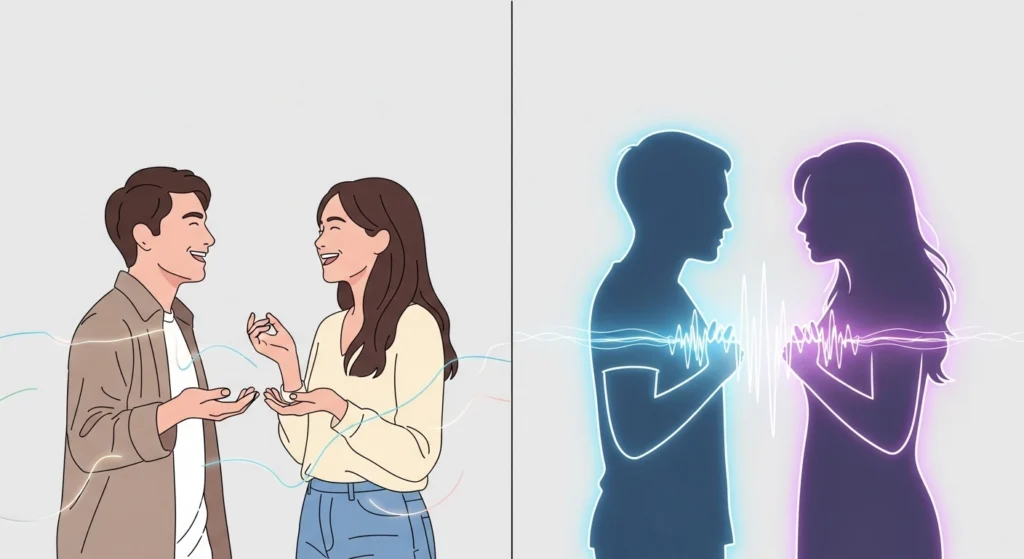
From an emotional vs spiritual perspective, the answer can change. Emotionally, a one-sided bond is very common. Your mind creates a strong link when you think about someone again and again. This is called emotional attachment or even limerence. You may feel like there is an energy connection between people, but it is often your brain holding onto that person. Spiritually, some people believe in a spiritual connection, not mutual, where one person feels the bond more deeply.
They may say you can feel someone’s energy even without contact. But even in spiritual views, the strongest and healthiest connections are mutual. When only one person feels it, it is more likely emotional than spiritual. This is why many experts say that a one-sided soul tie is not a true shared connection, but a strong personal attachment that feels like one.
Can only one Person have a Soul Tie?
The answer is yes, but it is not always a real “two-way” connection. It is often one person holding onto the bond while the other moves on. You may feel close, think about them often, and believe there is something special. But the other person may not feel anything deep. This creates a one-sided spiritual connection, even if it is not real on both sides.
Many people also ask, do soul ties affect both sides. The answer is no. In one-sided cases, only one person feels the emotional weight. The other person may not even notice. This is why it can feel painful and confusing. The key thing to remember is this: your feelings are valid, but a real soul connection is mutual. If it is one-sided, it is more about your heart than a shared bond.
Do Soul Ties Affect Both Sides?
Sometimes yes, sometimes no. Do soul ties affect both sides? In a healthy, mutual connection — like a strong marriage or a lifelong friendship — both people usually feel the bond. It is balanced, like two people on a seesaw who weigh the same.
But in many cases, one person feels more attached than the other. One person is holding on with both hands while the other has already let go. This is what makes one-sided soul ties so painful. You keep feeling the pull, but when you look across the room, they are not even looking your way.
Can Soul Ties Be One-Sided in a Relationship?
Yes, and it happens more often than people admit. Think about situationships — those confusing “almost relationships” where one person is all in, and the other is just passing time. That is a textbook example of unequal emotional attachment in a relationship.
In these cases, one partner gives everything — time, energy, love, attention. The other partner takes it all but never gives it back. It is like watering a plant that someone else keeps moving into the shade. No matter how much you pour in, it never grows the way you hoped.
Situationship emotional bonding is tricky because there are no clear labels. You might feel a deep attachment without a relationship — a bond that has no name but still hurts when it breaks. You feel connected, but the other person treats it like a casual thing. This kind of toxic emotional attachment can drain you slowly, like a small leak in a tire that you do not notice until you are stuck on the side of the road.
The hardest part? You keep asking yourself: Why do I feel connected to someone who ignores me? The answer often lies in your own emotional patterns, past wounds, and the way your brain has learned to attach to people.
Can You Have a Soul Tie With Someone You Have Not Slept With?
Many people think soul ties only form through physical closeness. But that is a myth. Can you have a soul tie without intimacy? Yes, you can. A soul tie can form through deep conversations, shared tears, emotional vulnerability, or even long hours spent talking online.
Think about a friend you talked to every single night for months. You shared your fears, your dreams, your secrets. Even though you never held hands or kissed, you feel like that person knows you better than anyone. That is emotional bonding without physical touch. It is real, and it is powerful.
Can you be spiritually connected without dating? Of course. Some of the strongest spiritual bonds happen between people who have never been in a romantic relationship. A mentor, a prayer partner, a childhood friend — these connections can run just as deep as any romantic one. It is like two rivers that flow side by side without ever merging — they still shape the same valley.
Does intimacy create soul ties? It can, but it is not the only way. Emotional closeness, shared pain, and even online emotional attachment through social media soul ties can create bonds that feel unbreakable. In this digital age, people form deep relationships and attachments through screens, late-night texts, and video calls — without ever meeting face to face.
Signs of a One-Sided Soul Tie
How do you know if you are stuck in a one-sided soul tie? Here is a simple checklist. If you check off three or more of these, you might be dealing with a one-sided soul tie.
✅ One-Sided Soul Tie Checklist
- You think about them constantly — even when you try to stop. Their face pops into your mind like a song stuck on repeat. This is a classic sign of emotional attachment.
- They do not put in effort — you are always the one calling, texting, or reaching out. They reply when it is easy for them, but never go out of their way. These are clear signs someone is not connected to you.
- You feel emotionally stuck — like you cannot move forward in life because part of you is still tied to them. It is like trying to drive with the parking brake on.
- They have moved on, but you have not — they are living their life, dating new people, posting happy photos. Meanwhile, you are still replaying old conversations in your head. This is one of the most painful signs of unrequited love.
- You feel a “connection” without contact — even when you have not spoken in weeks or months, you still feel their energy. You might even dream about them. This feeling of can you feel someone spiritually without contact is very common in one-sided soul ties.
- You keep making excuses for them — you tell yourself they are busy, or that they care but just do not show it. Deep down, you know the truth, but admitting it feels too painful.
- You feel drained after thinking about them — instead of feeling happy when you think of this person, you feel tired, sad, or anxious. That is a sign of emotional dependency, not love.
If this checklist hits close to home, do not panic. Knowing the signs of soul ties is the first step toward healing. You cannot fix what you do not see.
Why Do One-Sided Soul Ties Happen?
Why one-sided soul ties happen is not always simple. It is usually a mix of emotions, past experiences, and brain chemistry working together. Here are the most common reasons:
Emotional Vulnerability
When you open up to someone during a hard time — maybe you were going through a breakup, a loss, or a lonely season — your heart is wide open. It is like an open wound. Whoever touches it leaves a mark. That person might not have meant to create a deep bond, but your emotional state made you attach to them like glue.
Trauma Bonding
Trauma bonding is one of the biggest reasons behind one-sided soul ties. When someone hurts you but also shows you moments of kindness, your brain gets confused. It is like a dog that gets scolded and then given a treat — the brain starts to associate pain with love. This creates a cycle of emotional dependency that feels impossible to break.
Trauma bonding vs soul ties — what is the difference? A soul tie can be healthy or unhealthy. A trauma bond is almost always harmful. It keeps you stuck in a toxic pattern where you mistake fear for love and pain for passion.
Loneliness and Deep Emotional Sharing
When you are lonely, your heart is hungry for connection. And when someone feeds that hunger — even just a little — you hold on tight. You shared your deepest feelings with this person. You told them things you never told anyone else. That level of deep emotional connection without a relationship can feel like a soul tie, even if the other person sees it as just a casual chat.
Attachment Styles and Brain Chemistry
Attachment styles play a huge role here. If you have an anxious attachment style, you tend to cling to people and fear being left behind. If the other person has an avoidant attachment style, they pull away when things get close. This push-pull dynamic creates an intense one-sided bond.
Your brain also plays tricks on you. Dopamine attachment — the “feel good” chemical — gets released when you are around someone you like. Even just thinking about them triggers a little dopamine hit. Over time, your brain gets addicted to that feeling, much like how a person might get hooked on sugar. You keep coming back for more, even when the other person gives you nothing.
Unhealed Wounds
Sometimes, a one-sided soul tie is not really about the other person at all. It is about your own unhealed wounds. Maybe this person reminds you of a parent who was never fully present. Maybe they represent something you have always wanted but never had. Your heart latches on because it is trying to heal an old hurt through a new person. It is like putting a bandage on the wrong cut — it covers something, but it does not fix the real problem.
Is It a Soul Tie or Just an Emotional Attachment?
This is a question many people struggle with. Is it a soul tie or just an attachment? Sometimes what feels like a deep spiritual connection is really just your brain’s attachment system doing its job. Let us break it down.
Emotional attachment vs soul tie — emotional attachment is normal. Every human being forms attachments. You get attached to your pet, your home, your favorite coffee mug. It is part of being alive. But a soul tie goes deeper. It is not just comfort or habit — it is a feeling that this person is woven into your very being.
Soul tie vs limerence — limerence meaning is an intense, obsessive infatuation with another person. It feels like love on fire. You think about them every second. You read into every text message. You imagine a future together even when they have shown no interest. Limerence is often confused with a soul tie, but it is more about obsession vs love. If you ask yourself is it love or obsession, the answer often reveals whether it is a soul tie or limerence.
Here is a simple test: Does this connection make you grow? Or does it make you shrink? A real soul tie — even a painful one — teaches you something about yourself. Pure limerence or emotional dependency just drains you dry, like a bucket with a hole in the bottom.
| Feature | Soul Tie | Emotional Attachment | Limerence |
|---|---|---|---|
| Depth | Very deep, soul-level | Moderate | Intense but surface |
| Duration | Can last years | Fades with distance | Burns out eventually |
| Mutual? | Can be one-sided | Usually mutual | Almost always one-sided |
| Healthy? | Can be either | Usually healthy | Rarely healthy |
| Based on | Emotional + spiritual bond | Comfort + familiarity | Fantasy + obsession |
Do Soul Ties Affect Men Differently?
Do soul ties affect men? Yes, they do. Do men feel soul ties? Absolutely. But men often show it differently. Society teaches many boys to hide their feelings, to “man up,” to push through pain without crying. So when a man has a one-sided soul tie, he might not talk about it. He might not cry about it. But inside, he feels it just as deeply.
Why men detach emotionally does not mean they do not feel. It often means they have learned to cope by shutting down instead of opening up. A man with an avoidant attachment style might walk away from a relationship but still think about that person every night before bed. He might scroll through old photos but never admit it.
Emotional connection in men vs women is not about who feels more — it is about how each person expresses what they feel. Women tend to talk about their pain. Men tend to bury it. But buried feelings do not die. They grow underground like roots, and they can affect a man’s future relationships, his self-worth, and his ability to trust.
Difference Between Soulmates and Soul Ties
People often mix up soulmates and soul ties, but they are not the same thing. Soulmate vs soul tie — a soulmate is someone who matches your energy in a beautiful, natural way. A soul tie is a bond that can be beautiful or painful. It is like the difference between soulmates and soul ties is the difference between a warm bath and a strong current — both involve water, but one relaxes you and the other can pull you under.
| Soulmate | Soul Tie |
|---|---|
| Usually mutual | Can be one-sided |
| Brings peace | Can bring pain |
| Feels natural | Can feel forced |
| Healthy by nature | Can be toxic or healthy |
| Rare — one or two in life | Can have many |
| Based on deep compatibility | Based on emotional or spiritual bonding |
Love vs attachment vs soul connection — love wants the best for the other person, even if it hurts you. Attachment wants to hold on, even if it hurts both of you. A soul connection is the thread that ties two people together, for better or worse. Knowing which one you are feeling is the key to finding peace.
What Does the Bible Say About Soul Ties?
Soul ties in the Bible are often discussed by pastors and spiritual leaders, though the exact phrase “soul tie” does not appear word-for-word in Scripture. The concept comes from passages like 1 Samuel 18:1, where it says that “the soul of Jonathan was knit with the soul of David.” That is a picture of a deep, mutual, healthy soul tie between two friends.
The biblical meaning of soul ties often focuses on the idea that people can become spiritually connected through covenant, friendship, or intimacy. In a positive sense, marriage creates a godly soul tie. In a negative sense, unhealthy relationships can create bonds that hold you back from God’s plan for your life.
Can Soul Ties Be One-Sided in Christianity?
Many Christian teachers say yes. They point to examples of people who become emotionally or spiritually attached to someone who does not return that devotion. In these cases, the bond becomes a chain rather than a blessing. The spiritual vs biblical connection debate continues, but most agree that any tie that pulls you away from peace, growth, and faith is one worth breaking.
Are soul ties real in the Bible? The concept is supported by the language of Scripture — hearts being “knit together,” becoming “one flesh,” and being “yoked” with another person. Whether you interpret these spiritually or emotionally, the idea of deep human bonds is clearly part of the biblical worldview.
Can Soul Ties Be Broken?
Yes. Without question. It is not easy — breaking a soul tie can feel like pulling a thorn from your skin. It hurts while it is happening, but once it is out, healing can finally begin.
Are soul ties breakable? They are. Whether the tie is emotional, spiritual, or rooted in trauma, there are real steps you can take to cut it loose. The process looks different for everyone, but the goal is the same — freedom.
How to Break a One-Sided Soul Tie

How to break a soul tie — especially a one-sided one — takes courage. Here are clear steps you can follow:
1. Accept Reality
The first step in how to detach from someone emotionally is to stop pretending. If the other person is not putting in effort, if they have moved on, if they do not feel what you feel, you need to accept that truth. It is like trying to swim upstream. At some point, you have to stop fighting the current and let yourself float to calmer water.
2. Cut Contact (No Contact Rule)
How to stop thinking about someone starts with removing them from your daily life. Unfollow them. Delete their number if you have to. Stop checking their social media. Every time you look at their page, you are picking at a wound that is trying to heal. Ghosting and emotional attachment often go hand-in-hand — the person who ghosted you does not deserve space in your mind.
3. Remove Emotional Triggers
Old photos, saved messages, gifts they gave you — these are emotional triggers and memory connection points that keep the tie alive. Pack them away or delete them. It is not about being cold. It is about giving yourself room to breathe. Think of it like clearing smoke from a room — you need fresh air to see clearly.
4. Prayer and Spiritual Healing
For those who hold faith, cutting spiritual ties through prayer is a powerful step. Many people find peace by asking God to break unhealthy bonds and restore their hearts. Letting go of someone spiritually means trusting that your healing is in bigger hands than your own.
5. Self-Focus and Growth
The best way to heal from emotional attachment is to pour that energy back into yourself. Start a new hobby. Exercise. Journal your feelings. Spend time with people who actually show up for you. Healing after one-sided love is not about forgetting — it is about rebuilding. It is like replanting a garden after a storm. The soil is still good. You just need to plant new seeds.
Emotional closure techniques like writing a letter you never send, talking to a therapist, or doing a symbolic ritual (like burning a page of old memories) can also help you find the closure the other person never gave you. How to break the attachment cycle starts with one brave decision — choosing yourself over someone who never chose you.
How Long Does It Take to Break a Soul Tie?
There is no set timeline. How long do one-sided soul ties last? Some people heal in weeks. Others carry a soul tie for years. It depends on how deep the bond was, how much pain was involved, and how much healing work you are willing to do.
Why emotional attachment feels so strong is because your brain has built pathways around that person. Every memory, every conversation, every shared laugh created a neural path — like a trail worn into a forest floor. The more you walked that trail, the deeper it got. Breaking a soul tie means building new trails and letting the old one grow over with grass and time.
Why you cannot move on from someone is often not about love. It is about habit, fear, and the subconscious emotional connection your brain formed without your permission. Be patient with yourself. Healing is not a race. It is a walk, one step at a time.
Real Questions People Ask
Can Soul Ties Be One-Sided — Reddit Discussions
Reddit threads are full of real stories from real people. Many share experiences of feeling deeply connected to someone who did not feel the same way. Common themes include: “I felt like we had something special, but they acted like I was just another person,” and “I kept holding on because I thought they would eventually feel what I felt.”
These real stories about soul ties and personal experiences of one-sided love show that this is a universal human experience. You are not alone in this. Millions of people have asked the same question: is it real or in your head? The truth is, the feelings are real — but that does not mean the connection is mutual.
Why Do I Feel Connected, But They Do Not?
This is one of the most heartbreaking questions a person can ask. The answer usually comes down to attachment patterns. You might have an anxious attachment style that makes you bond quickly and deeply. They might have an avoidant style that makes them pull away. It is not that you are wrong or broken — your wiring is just different from theirs.
Why you feel it, but they don’t, can also be explained by the energy connection between people. Some believe that certain people are more spiritually sensitive — they pick up on someone’s energy more easily. If you are someone who feels deeply, you might sense a bond that the other person’s heart is simply not open enough to receive.
Stages of a One-Sided Soul Tie
Understanding the stages of soul ties can help you see where you are in the journey. Here is what a one-sided soul tie often looks like from beginning to end:
- The Spark — You meet someone and feel an instant pull. It is like a magnet snapping into place. You feel alive around them.
- The Deepening — You start sharing more. Conversations go deeper. You begin to feel like this person truly sees you.
- The Imbalance — You realize you are giving more than they are. You text first. You plan everything. They show up when it is easy for them.
- The Denial — You make excuses. “They are just busy.” “They care, they just show it differently.” You ignore the red flags because the connection feels too good to question.
- The Pain — The truth hits you. This connection is one-sided. The hurt is sharp, like stepping on broken glass.
- The Release — You begin to let go. It is slow. It hurts. But with every day of healing, the grip gets a little looser.
- The Growth — You come out the other side stronger, wiser, and more aware of what you need and what you deserve.
Frequently Asked Questions
Can soul ties be one-sided?
Yes. One person can feel a deep emotional or spiritual bond while the other person feels little or nothing. This is very common in situations where one partner is more emotionally invested than the other.
Can only one person have a soul tie?
Yes. A soul tie does not require both people to feel the same thing. One person can develop a strong bond through emotional sharing, vulnerability, or trauma, while the other person may not form the same attachment.
Do soul ties affect both people?
In mutual soul ties, yes. But in one-sided soul ties, only one person carries the emotional weight. The other person may have moved on or may never have felt the same depth of connection.
Can soul ties be broken?
Yes. Through self-awareness, no-contact boundaries, emotional healing, prayer or spiritual practices, and professional support, soul ties can be broken. It takes time, but freedom is possible.
Can you have a soul tie without intimacy?
Absolutely. Soul ties can form through deep emotional conversations, shared trauma, vulnerability, spiritual experiences, and even online connections. Physical intimacy is not required.
What are the signs of a one-sided soul tie?
Common signs include constantly thinking about someone who does not think about you, feeling emotionally stuck, being unable to move on, making excuses for their behavior, and feeling drained instead of energized by the connection.
How long do one-sided soul ties last?
There is no fixed timeline. Some fade in weeks, while others can last for years. The duration depends on how deep the bond was, your attachment style, and how actively you pursue healing.
Is it a soul tie or just an emotional attachment?
A soul tie feels deeper than a normal attachment — it reaches your core identity and spirit. Emotional attachment is based on comfort and familiarity. If the bond makes you feel controlled rather than connected, it may be an unhealthy soul tie rather than simple attachment.
Final Thoughts
Can soul ties be one-sided? Yes. And if you are living through one right now, please know this — your feelings are valid, but they do not have to control your life. Not every strong feeling is a soul tie. Sometimes it is loneliness wearing a mask. Sometimes it is trauma pretending to be love. And sometimes it is a real connection that simply was not meant to be mutual.
Healing from soul ties is not about becoming cold or shutting your heart down. It is about learning to give your love to people who give it back. It is about choosing yourself — not out of selfishness, but out of self-respect. Letting go is not giving up. It is growing up. It is making room in your life for the connections that actually fill your cup instead of draining it.
How to release emotional attachment is a process, not a moment. Be gentle with yourself. Talk to someone you trust — a friend, a counselor, a spiritual leader. And remember: you are worthy of a love that does not make you guess. You are worthy of a bond that flows both ways, like a river with no dam. That kind of connection is out there. But first, you have to let go of the one that is not.
Step-by-step healing from soul ties is possible. You have already taken the first step by reading this far. Now keep walking. The trail ahead is brighter than the one behind you.